On 19 June 2026, the National Budget placed the circular economy near the centre of national policy: a Rs 150 million programme to strengthen waste management from a circular-economy perspective, a proposed Circular Economy Bill, and a stronger regulatory framework for waste-to-wealth activities. The direction is now set. The harder question is delivery.
Durgesh Teeluckdharry sits at the point where that question is answered. As Chief Operating Officer of IWPF North Ltd and IWPF West Ltd, he is helping develop two proposed regional integrated waste-processing projects intended to support the national transition. A Registered Professional Civil Engineer with an MBA and a Master’s in Civil Engineering, he belongs to a generation of Mauritian professionals taking senior responsibility for complex national infrastructure and arguing that it can be led from here, at home, to international standard.
In this interview he is deliberately unromantic about what comes next. He welcomes the Budget’s ambition, but insists the country’s real test is unglamorous: collection discipline, clean feedstock, honest measurement and clear accountability. His motivation, throughout, is national keeping value, skills and resource security on the island rather than burying them.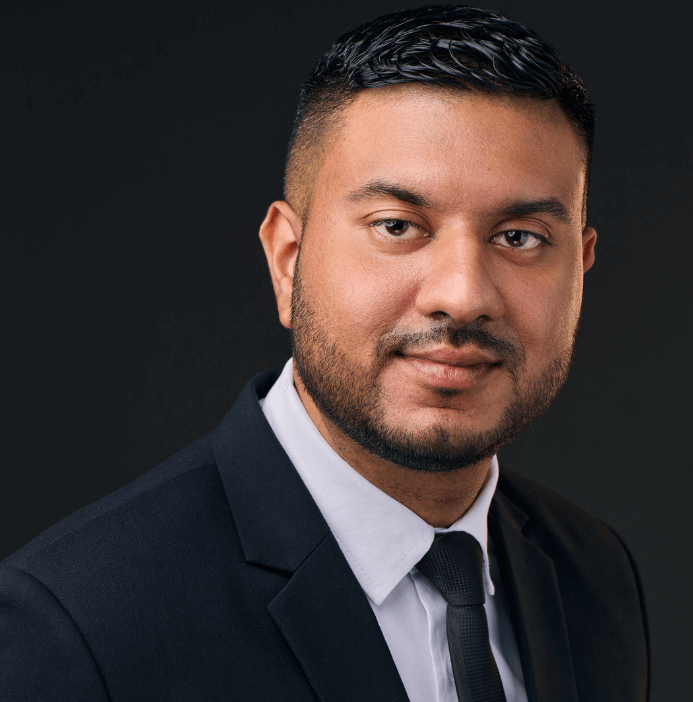
- The Budget put circular economy and waste-to-wealth near the centre of national policy. As someone who has to deliver infrastructure on the ground, what did you actually see in it?
The honest answer is that the Budget did the part that is easiest and the part only Government can do: it set direction. The Rs 150 million programme, the proposed Circular Economy Bill and the waste-to-wealth framework tell the country which way to walk, and that matters. But I would caution anyone who reads a budget line as a solution. Direction is not delivery. What I look for now is sequencing what gets built, in what order, and who is accountable when it slips. Mauritius rarely lacks ambition in a budget speech. Where we have struggled, historically, is converting ambition into funded, sequenced, accountable execution. That gap is where my work lives, and it is the part no allocation can solve on its own.
- You trained as a civil engineer and then took an MBA. How does that combination shape the way you read a project like this?
Engineering taught me that a facility either works under real conditions or it does not there is no rhetorical version of a processing line. The MBA taught me that the best-engineered plant in the country still fails if it is not financeable, contractually sound and operationally realistic. I sit deliberately at that intersection. When I look at IWPF North and IWPF West, I am not asking only whether the technology is sound. I am asking whether the waste supply is real, whether each risk sits with the party best able to carry it, whether the surrounding community will accept living alongside it, and whether it will still run safely in twenty years. Most infrastructure does not fail in the design. It fails in the assumptions nobody stress-tested.
- You have suggested the money is not the real constraint. Then what is?
Feedstock quality and collection discipline the unglamorous part. This is the line I will defend: the bottleneck in Mauritius is not the budget and it is not the technology. It is whether clean, well-separated material actually reaches the gate. A processing line designed for, say, fifteen per cent contamination does not perform a little worse at forty per cent it chokes. Recovery rates collapse, costs rise, and the economics that justified the plant disappear. So the country can build the facility, pass the Bill and spend the allocation, and still fail if the collection chain delivers contaminated waste. The real work is logistics, procedures, training and consistency across dozens of collection rounds, every single day. That is far less photogenic than a ribbon-cutting, and it is the thing that actually decides whether any of this works.
- What is the most common way projects like this go wrong?
Fragmentation. A plant gets built before the collection system that feeds it is ready. A legal obligation is created before the logistics exist to honour it. Recovered material is produced before there is a credible buyer for it. Each piece can look defensible on its own, and the system still does not work, because nobody owned the joins between them. The second failure is diluted accountability when five institutions are responsible, no one is. My job, in plain terms, is to own those joins: to keep the technical, legal, financial, environmental and community workstreams pointed at one outcome, and to surface risk early enough that it can still be fixed cheaply rather than expensively.
- Can Mauritius realistically eliminate landfill?
No and I think it is important to say so plainly rather than promise something we cannot deliver. Even advanced systems produce residual material that has to go somewhere. The credible objective is to make landfill the destination of last resort instead of the default: recover more, process suitable organics, and shrink the volume that requires final disposal year on year. I would far rather the country measure this honestly recovery rates, contamination levels, tonnes diverted than market a “zero landfill” headline it cannot stand behind. In infrastructure, credibility compounds. So does the loss of it.
- What does this transition mean economically, beyond the environmental case?
This is where it matters most to me as a Mauritian. Every tonne of material we recover here is value we are no longer importing, and every part of the chain collection, sorting, processing, monitoring, laboratory testing, maintenance, plant operation is work that can be done by Mauritians, with skills built and kept on the island. Properly processed organic material can support our agriculture and our soils. Recovered material can feed local manufacturing. We have spent decades treating waste as a cost to be buried. The opportunity now is to treat it as a domestic resource and a source of skilled employment. For a small island that imports most of what it consumes, that is not an environmental nicety. It is resource security.
- A project like this outlasts any one team. What are you actually trying to leave behind?
The plants are the visible part, but they are not the legacy I care most about. I want to leave behind stronger institutions, better data, and a cohort of Mauritian engineers and operators who have done this work to international standard here, at home and a public that has reason to trust how major infrastructure is delivered in this country. I belong to a generation of Mauritian professionals who no longer accept that ambitious, complex projects have to be led from abroad. We can lead them ourselves, without compromising on integrity or discipline. If these projects help prove that, then the infrastructure will be the smaller achievement.
- Your final message, now that the Budget has set the direction?
Mauritius has stated its ambition. The responsibility now is delivery and delivery is unglamorous, sequenced, accountable work, not announcements. I do not accept that limited land, rising waste volumes and dependence on imported resources are permanent weaknesses. Handled with the right infrastructure, regulation and discipline, they become reasons to innovate. My commitment is to help build projects that create value for this country for decades not facilities that solve a headline for a season. The direction has been set. Turning it into results is now our job, and I intend to do my part of it.
SOURCE BASIS & PUBLICATION NOTE
- Budget Speech 2026–2027 (delivered 19 June 2026): Rs 150 million programme to strengthen national waste management from a circular-economy perspective; proposed Circular Economy Bill; stronger regulatory framework for waste-to-wealth activities.
- Annex to the Budget Speech 2026–2027: extension of the Rs 2 excise duty to all plastic bottles, effective 1 October 2026; proposed Environment Act amendments on illegal dumping and improper disposal; proposed amendments to the Waste Management and Resource Recovery Act.